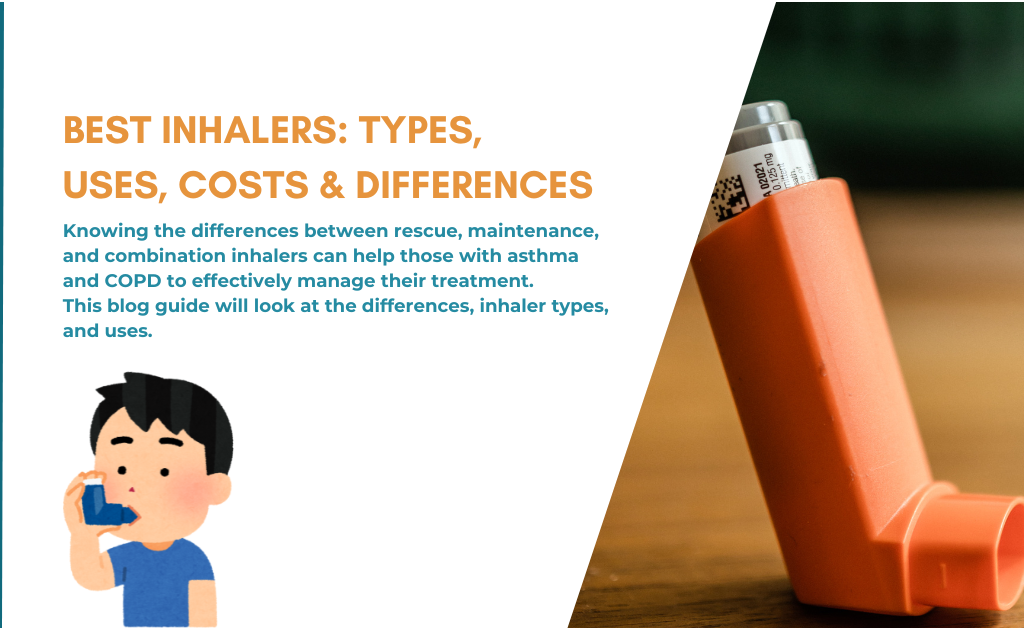
Your decision in choosing an appropriate inhaler depends on the condition you suffer from, how severe your symptoms are, how often you have breathing difficulties, and your skill in using the device. It may happen that what works well for one person may not be suitable for you.
Knowing the differences between rescue, maintenance, and combination inhalers can help those with asthma and COPD to effectively manage their treatment. The cost, ease of use, and correct inhaler technique are also very important.
This blog guide will look at the differences, inhaler types, and uses.
What Are the Best Inhalers for Different Respiratory Conditions?
There is not always one best inhaler for each condition. Your diagnosis, symptoms, goals of treatment, and individual needs vary on what is best for you.
Steroids are commonly used for asthma to reduce airway inflammation. Your doctor may prescribe a fast-acting inhaler, or a combination inhaler containing an anti-inflammatory medicine and a long-acting bronchodilator.
Long-acting bronchodilators are commonly used for COPD. Inhaled steroids are only prescribed for some patients based on factors like exacerbation history and other clinical findings.
Inhalers can help with other conditions causing inflammation or tightening of the airways. However, you should not ignore symptoms like wheezing, breathlessness, and prolonged cough. When choosing your inhaler, there are important factors to consider.
Types of Inhalers: Rescue, Maintenance, and Combination Inhalers
Inhalers are used to deliver medication directly to the respiratory system. They can look similar but may have different ingredients, fast-acting properties, and uses.
- Rescue Inhalers: Rescue inhalers are used to help relieve sudden symptoms by relaxing muscles around the airways. They are commonly used when having sudden episodes of bronchoconstriction.
Common examples include salbutamol and other short-acting beta-2 agonists. They can provide quick relief of symptoms such as wheezing, tightness in the chest, and breathlessness caused by reversible airway narrowing. They usually start to work within minutes. These are very familiar to asthmatics. However, they should not be used as a substitute for long-term care.
- Maintenance Inhalers: Long- Acting. Maintenance inhalers are used regularly to help control symptoms and reduce the risk of your condition worsening. They are not all fast-acting like traditional rescue inhalers.
Long-acting bronchodilators help to relax muscles around the airways. Examples include long-acting beta-2 agonists and long-acting muscarinic antagonists.
They play a key role in COPD treatment. They are prescribed alongside inhaled steroids to help reduce airway inflammation and keep your condition under control. Depending on the medication and inhaler, they may be taken once per day or more frequently.
- Corticosteroid Inhalers: Reduce Airway Inflammation: Inhaled steroids help to reduce airway inflammation. They are a key part of asthma treatment due to the nature of the disease. Examples include budesonide, beclomethasone, and fluticasone. These are usually taken regularly as prescribed.
They do not work as a fast- acting bronchodilator but provide benefits with regular use. They can help to reduce symptoms and reduce the risk of severe asthma exacerbations. Side effects may include oral thrush, a sore throat, and a hoarse voice. Using the correct technique, rinsing your mouth and spitting the water away can help to reduce this.
- Combination Inhalers: Multiple Medications: Combination inhalers contain more than one medication that works in different ways. This can help to make treatment easier by providing multiple medications in one device. These include ICS/LABA, LABA/LAMA, ICS/LABA/LAMA. It is best for patients requiring multiple types of respiratory medication and who are using it as part of a suitable treatment plan.
Cost of Inhalers – Are More Expensive Inhalers Better?
The cost of inhalers will depend on what medication they contain, brand, device, strength and availability. Generic medications can help reduce the cost. However, the cost will vary depending on what you need.
Prices can vary from a few dollars up to much higher for some combination inhalers. Therefore, you should check and compare what they actually cost in local pharmacies nearby.
Cost can be varied on multiple factors like:
- May be more expensive if multiple medications are contained.
- Generic medication may offer affordable pricing compared to a brand with the same active ingredient and strength.
- Different devices such as metered-dose inhalers and dry powder inhalers offer different prices.
- If you are using it regularly as a maintenance inhaler, it will cost you money.
How to Choose the Right Inhaler with Your Healthcare Provider
Choosing the right inhaler depends on your respiratory condition, symptoms, and treatment goals. Your decision should call on:
- Medical needs: Asthma and COPD require different treatment approaches.
- Device type: Choose a device you can use correctly, with professional guidance if needed.
- Purpose: Rescue inhalers provide quick relief, while maintenance inhalers help control symptoms over time.
- Cost: Compare suitable branded and generic options without compromising treatment.
- Regular review: Consult your healthcare professional if symptoms persist or your inhaler becomes difficult to afford.
Always follow your prescription and seek medical advice before switching inhalers. The best choice combines effectiveness, correct technique, safety, and affordability.
Finding the right medication should be simple, informed, and convenient. LifeRx Pharmacy helps you explore your medication needs while keeping product information and affordability in mind. They make you easily aware and offer a wide range of prescribed medication and product options.
You’ll be able to see what medications are available and how much they cost. You can also ask about the best value medications. If you plan your prescriptions, you can reduce any disruptions. Make decisions about your health. Understand your prescription, compare the best options, and seek advice where needed to feel more confident.
Final Thoughts
The best inhalers for asthma will depend on your respiratory condition, the correct medication, and ease of use. Rescue inhalers can provide quick relief, maintenance inhalers help with long-term control, corticosteroid inhalers help with inflammation, and combination inhalers provide multiple treatments.
Whilst cost is important, you should also consider safety, effectiveness, the correct device for you, and whether you can get it on an ongoing basis. If your symptoms are worsening or you are struggling to afford your inhaler, a medical review can help you find a suitable treatment.
FAQs
What is the best fast-acting inhaler?
Salbutamol is a common fast-acting inhaler used for bronchospasm. Some asthmatics are prescribed an inhaled steroid/formoterol inhaler to help with symptoms as part of a specific treatment plan.
What is the difference between a rescue inhaler and a maintenance inhaler?
A rescue inhaler is used to quickly relieve sudden symptoms. It usually helps to relax muscles around the airways. A maintenance inhaler is taken regularly to help control the underlying disease, long-term symptoms, or prevent exacerbations. Some inhalers overlap; however, you should follow your specific treatment.
Are expensive inhalers better than generic ones?
Not necessarily. Generic inhalers may be cheaper and contain the same medication and strength if approved. However, the device, formulation, and inhalation technique may affect how well it works. Compare the exact product with a healthcare professional or pharmacist.
What inhalers are commonly used for Asthma and COPD?
Asthma commonly uses inhaled steroids, ICS/LABA inhalers, and prescribed relievers. COPD often uses long-acting bronchodilators such as LABA and LAMA. Some may also be prescribed inhaled steroids. It depends on your symptoms, exacerbation history, how well you are responding to treatment, and other factors.
Can I change the inhaler if it is too expensive?
You can, but always speak with your physician first. They can check if the medication, strength, and device are suitable for your condition. Don’t stop taking your prescribed maintenance inhaler or use a rescue inhaler without a doctor’s recommendation.